Thursday, December 23, 2021

Ballads: Willie o Winsbury

One of the new projects I want to start working on for 2022 is BALLADS, and I'm getting a bit of a head start now. My goal is to write up some ballads here, and then think about ways to turn them into new kinds of stories: microfiction, flash fiction, readers theater, etc.

I'll start by working through the songs on one of my favorite albums, Anaïs Mitchell and Jefferson Hamer's Child Ballads, beginning with Willie o Winsbury.
Child Ballad 100: but the lyrics are a quite different version

Here are the lyrics for the version on their album:

The king has been a prisoner
And a prisoner long in Spain
And Willie of the Winsbury
Has lain long with his daughter Jane.

"What ails you, what ails you, my daughter Jane?
Why you look so pale and wan?
Oh have you had any ill sickness?
Or yet been sleeping with a man?"

"I have not had any ill sickness
Nor yet been sleeping with a man;
It is for you my father dear
For biding so long in Spain."

"Cast off, cast off your robe and gown,
Stand naked on the stone,
That I might know you by your shape
If you be a maiden or none."

And she's cast off her robe and gown,
Stood naked on the stone;
Her apron was tight and her waist was round
Her face was pale and wan.

"And was it with a lord or a gentleman
Or a man of wealth and fame?
Or was it with one of my servingmen
While I was a prisoner in Spain?"

"No, it wasn't with a lord or a gentleman
Or a man of wealth and fame;
It was with Willie of Winsbury
I could bide no longer alone."

And the king has called his servingmen
By one, by two and by three,
Saying, "Where is this Willie of Winsbury?
For hanged he shall be."

And when they came before the king
By one, by two and by three
Willie should have been the first of them
But the last of them was he.

And Willie of the Winsbury
All dressed up in red silk,
His hair hung like the strands of gold,
His breast was white as milk,

"No wonder, no wonder," the king he said
"That my daughter's love you did win.
If I were a woman as I am a man
In my own bed you would have been.

And will you marry my daughter Jane
By the faith of your right hand?
And I'll make you the lord of my servingmen
I'll make you the heir to my land."

"Oh yes, I'll marry your daughter Jane
By the faith of my right hand,
But I'll not be the lord of any man;
I'll be not be the heir to your land."

And he's raised her up on a milk white steed
And himself on a dapple gray
He has made her the lady of as much land
As she can ride on a long summer's day.

And here's an old broadside, where he's called Thomas Bright:


Here's a playlist:

Monday, December 13, 2021

The Leopard, the Rabbit, and the Monkey

This is my version of a public domain story: "The Leopard, the Hare, and the Monkey" which is a Baganda story from Unganda in Baskerville's The Flame Tree and Other Folklore Stories from Uganda. I have followed the original word by word while also feeling free to make my own changes and additions.


The Leopard, the Rabbit, and the Monkey

Once upon a time a leopard and a rabbit lived together in one house. One day the leopard said to the rabbit, "Let's go steal some goats." The rabbit didn't want to go steal goats, but he did want the leopard to go and bring some meat, so he agreed to what the leopard said, although the rabbit had his own plan in mind.

They started out in opposite directions, but as soon as the leopard was out of sight, the rabbit doubled back and followed the leopard who was creeping up the hillside towards a goat which was grazing by itself. The leopard crouched, and then he sprang, grabbing the goat with his claws. At just that moment the rabbit shouted, "Help! Help! The leopard is stealing my goat!" Thinking the goatherd had seen him, the leopard dropped the goat and ran. Once the leopard was gone, the rabbit dragged the goat into some bushes and, after waiting to make sure the leopard wasn't coming back, he dragged the goat all the way home.

"Here's the goat I stole!" shouted the rabbit triumphantly. "Where's your goat, Leopard?"

The leopard had to admit that he had failed to steal a goat, and he was very ashamed about that.

"Don't worry, friend," said the rabbit. "I'll share my goat with you of course. You'll do better next time, I'm sure."

When the meat was nearly cooked the rabbit went outside the house and shouted again. "I think they went this way! Come on! We're going to kill those goat-thieves once and for all!" The leopard thought the goatherd and his friends had followed them, so he ran off into the forest. 

By the time the leopard came back the next morning, the rabbit had eaten up all the meat, but he didn't tell the leopard that. Instead he said, "Oh, I am so glad you are safe and sound! The goatherds came and took the roasted goat away. I barely escaped with my life!"

This little drama repeated itself several times, and the leopard was getting thinner and thinner, while the rabbit was getting fatter and fatter. The leopard suspected the rabbit was tricking him somehow, but he could not figure it out.

Then a monkey, who had watched the goings-on from high in a tree, told the leopard what the rabbit was doing. "The rabbit has certainly made a monkey out of you!" chortled the monkey, and then he fled higher up into the trees so the leopard could not catch him.

That evening, the leopard was determined to catch rabbit in the act. When the rabbit went outside the house and shouted like a goatherd chasing a goat-thief, the leopard ran only a little ways into the forest. Then he turned around and came back to find the rabbit sitting down to a meal of roasted goat.

"I CAUGHT YOU!" shouted the leopard, but the rabbit was fast; he ran and jumped into an anthill, disappearing into the large hold at the top and then crouching down inside so that he was just beyond the reach of the leopard's paw. The leopard knew that anthills are made of very hard red earth, so if he tried to dig the rabbit out, he would just break all his claws. "You haven't escaped yet!" he shouted. "I'll fill that hole up with wood, light it on fire, and burn you inside." Then, cackling gleefully, the leopard looked for an animal who could guard the hole while he went to get some grass.

"Crow, do me a favor!" he shouted, seeing a crow in a nearby tree. "Come guard my prisoner in this hole while I go get some firewood."

The crow, however, never does favors for anyone, so he refused. "It's shady here in the tree," he squawked. "I'm not going to go sit in the sun just to guard an anthill. Find someone else!"

Then a monkey came walking along, the very same monkey who had told the leopard about rabbit's tricks to begin with. "Oh, my dear friend," said the leopard, "I am so glad to see you! Come and guard the rabbit whom you helped me to catch. I'm going to go get fireword so that I can burn him inside the anthill. Please make sure he doesn't get away before I come back and set the fire."

"I promise!" said the monkey agreeably, who then sat down on top of the anthill while the leopard ran home to get what he needed to build a fire.

As the monkey sat there he heard the rabbit munching something: munching and crunching, munching and crunching. "Hey, Rabbit!" he said. "What are you eating?"

"What do you think? I'm eating the ants. They are swarming everywhere down here, and they are absolutely delicious," replied the rabbit. "I've never had so much to eat, and they taste so good, very crunchy and absolutely delicious."

"Oh, give me some, please!" said the monkey. 

"Of course! As the saying goes: he who eats alone knows no joy. I'm glad to share," replied the rabbit. "Just lean down into the hole, and I'll hand you some."

The monkey leaned down into the hole, and then rabbit threw a handful of dust into his eyes. The monkey sprang back and rolled off the anthill, rubbing his eyes, while the rabbit jumped out of the hole and ran away. 

The crow, who was still sitting in the tree near by, laughed and laughed. 

"It's not funny, Crow!" shrieked the monkey, still trying to wipe the dust from his eyes. "What am I going to do when the leopard comes back?"

"Don't worry; I'll tell you what to do," the crow told him. "Go get some pumpkin seeds from the pumpkin patch over there" — crow gestured with his wing to a nearby garden — and then get some leaves and twigs too. Stuff the pumpkin-seeds and the twigs and leaves into the  hole and when the leopard comes, just tell him you've started getting the fire ready with a little kindling."

The monkey did exactly as the crow told him, and he had just finished stuffing the seeds and twigs and leaves into the hole when the leopard returned.

"I'm helping to set up the fire for you!" the monkey said as soon as he saw leopard.

"Why, thank you, Monkey!" said the leopard, who heaped firewood into the whole and then set it all on fire. It wasn't long before the first pumpkin-seed exploded with a POP.

"What was that?" asked the leopard. 

"One of the rabbit's eyes must have exploded," said the monkey solemnly. 

Then another seed went POP.

"That's his other eye!" croaked the crow. 

By then all the seeds were all getting hot, and they all began popping together, POP POP POP, and the crow burst out laughing, and the monkey swung himself up into the tree beside the crow and also started laughing. The leopard realized that they had tricked somehow and he fumed with rage, but there was nothing he could do. He waited until the fire went out and looked down into the hole.

No rabbit, and no rabbit remains. Instead there were only ashes from the wood and the twigs. The rabbit had escaped.

"This is all your fault, Monkey," growled the leopard, and he tried to jump up into the tree to get the monkey, but the monkey went higher and higher, up on the slender branches that cannot bear the leopard's weight... and to this days, leopards are still chasing monkeys, angry that the monkey let the rabbit escape from the anthill long, long ago.


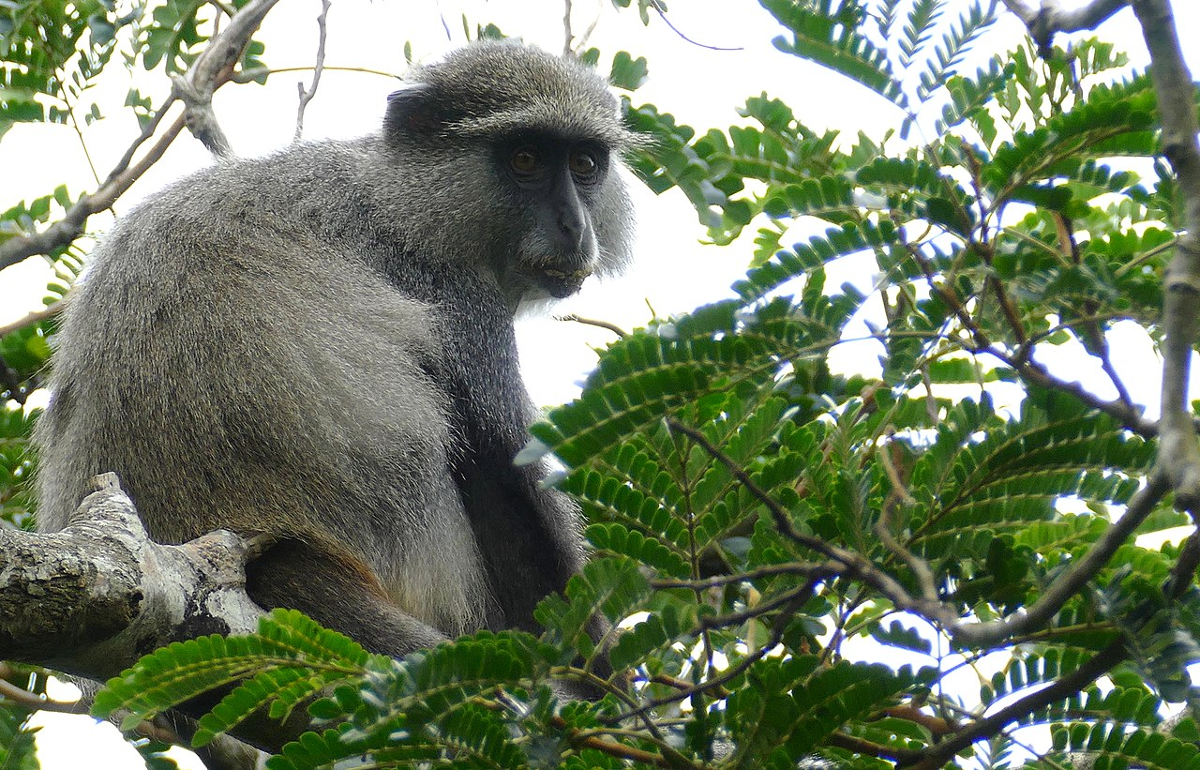
Samango Monkey by Bernard Dupont at Wikimedia


Saturday, December 11, 2021

The Lions and Kimona-Ngombe

This is my version of a public domain story: "The Lions and Kimona-Ngombe" which is an Ambundu story from Chatelain's Folktales of Angola. The storyteller was Jelemia dia Sabatelu ("Jeremiah the son of the Shoemaker"), from Malanje, one of Chatelain's main informants. I have followed the original word by word while also feeling free to make my own changes and additions.


The Lions and Kimona-Ngombe

The lions had settled in the wilderness. 

Later, famine came. The lions could not find food.

The lions said, "What shall we do? We are so hungry! The humans always have cattle, but we will have to journey all day to reach their village. Let's go now!"

So the lions journeyed until they reached the village of the humans. At the outskirts of the village, they stopped, and there they turned one of the lions into a beautiful woman. The lions dressed her in fine clothes they arranged her hair nicely, and then they told her what she must do. "This is the village of Chief Kimona-Ngombe, a man who has many cattle. When you go into the village, you must say that you are going on a journey to visit your brother who lives in a distant village. When Kimona-Ngombe sees you, he will talk to you and ask you to marry him. Then, when he marries you, you will kill him, and we will catch his cattle and eat them."

The young lioness agreed and walked down the path into the village, still getting used to her new way of walking just on two legs. She then found the chief sitting at the entrance to his house."You, young woman," he said, "where are you going?" 

The woman replied, "I am going to visit my brother who lives in a distant village. My long journey has made me tired. Please, perhaps you will allows your people to give me some water to drink." Kimona-Ngombe ordered his servants to bring water for the young woman to drink.

Then Kimona-Ngombe spoke to her again. "You, young woman, are you married already?" 

"No," she answered, "I'm not married yet." 

Then, just as the lions had predicted, Kimona-Ngombe proposed to her, and she accepted, "But first," she said, "let me go home first and tell my parents. I will come back in two days."

The woman then went back to the lions. "Kimona-Ngombe has talked to me," she told them, "and he asked to marry him. I said yes." 

The other lions said, "That is good." 

The woman slept two days, and then she returned to the Kimona-Ngombe's village. The people of the village killed a goat for her, and she ate. They also built her a house.

Chief Kimona-Ngombe told the people of his house, "Tonight I will go sleep in the house of my bride." 

"Don't leave me, Papa!" said a little boy. This was Ndala, the son of Kimona-Ngombe and his first wife. The boy clung to his father and wouldn't let go. "I will sleep with my papa." 

"Your father is going to sleep in the house of the new bride," said Ndala's mother. "You're going to sleep with me." 

But Ndala refused; he cried and cried, begging to go with his father. 

Finally his father agreed. "I see the boy won't let go of me," he said. "I suppose he can come with me tonight."

The chief and his little son arrived in the house of the bride and sat on the bed. The bride said, "What is this? The chief has come with a little boy." 

"This little boy is my son," said Kimona-Ngombe. "His name is Ndala, and he wanted to come with me tonight. He wouldn't stay in the house of his mother. He clung to me and wouldn't let go, so I have brought him here with me."

Then they lay down, the chief stretching out with his son on the mat beside the bride's bed.

Time passed. 

In the middle of the night, the woman rose up from the bed and turned back into a lioness; she was going to attack the chief!

Ndala, who was lying beside his father on the mat, saw the lioness coming. He roused his father, saying, "Papa, look out! There is a lion! It's going to bite you!" 

The father got up, but the lioness had already turned back into a woman.

"You're just having a bad dream, my son," he said. "Go back to sleep."

Daybreak came, another day passed, and then it was evening again. The chief announced that he was again going to sleep in the house of his new bride, and again his son clung to him and would not let go.

When they arrived at the new bride's house, she said, "O Chief, the child woke you already in the night. Why have you brought him here again?" 

"My son won't let go of me," replied the chief.

So they slept, the father and son lying together on the mat beside the new bride's bed.

The woman could hear the lions calling to her. "You, you who went to kill Kimona-Ngombe, aren't you coming? You, you who are a lion, why don't you come?" she heard them singing in the song of lions.

The woman sang back to them in the song of lions. "The goats of Kimona-Ngombe are asleep, the servants of Kimona-Ngombe are asleep, the chickens of Kimona-Ngombe are asleep, the pigs of Kimona-Ngombe are asleep, the sheep of Kimona-Ngombe are asleep and Kimona-Ngombe himself is asleep! But his son does not show the signs of sleeping on his face, oh no! His son Ndala is not asleep!"

And the lions sang to her again, "You, you who went to kill Kimona-Ngombe, you must kill him! You, you who are a lion, why don't you kill him?"

So the woman turned into a lion again; she was going to attack the chief.

The son, who was lying beside his father, saw the lion coming and roused his father. "Papa, wake up! Wake up! Something is coming this way!"

The lion immediately turned back into a woman.

His father replied, "You're lying, boy; I'm not going to listen to you." 

They slept again for a little while, and then again the woman could hear the lions calling to her. "You, you who went to kill Kimona-Ngombe, aren't you coming? You, you who are a lion, why don't you come?"

So the woman sang her song again. "Kimona-Ngombe is asleep, he is! But his son does not show the signs of sleeping on his face, oh no! His son Ndala is not asleep!"

Then the lions sang again, "You, you who went to kill Kimona-Ngombe, you must kill him! You, you who are a lion, why don't you kill him?"

Ndala stood up and shouted, "Papa, get up! This is the house of a wild beast. There is no bride here."

The chief was now very angry at his son. "We're going back to your mother," he said. "I will leave you there and come back here without you."

When they were outside of the house, the son told his father what he had seen. "The bride turns into a lion, and then she turns back into a bride. She is going to kill you, Papa! She is going to kill us both!"

"How can I believe this story?" said his father angrily.

"I am telling you the truth, Papa!" said Ndala. "Let's go back into the house. Pretend to be asleep, but listen carefully and stay awake. You'll see what happens!"

So the chief and his son went back into the house of the bride. 

The woman was angry when she saw the little boy, "You were going to take the child to his mother. Why has he come back with you?"

The chief said, "I tried to leave him there, but the child would not stay with his mother." 

So they lay down again. The chief pulled the sleeping-cloth up over his head, but he was listening carefully and watching through the cloth to see what happened next.

Again the lions sang, "You, you who went to kill Kimona-Ngombe, aren't you coming? You, you who are a lion, why don't you come?" 

Again the woman sang, "The goats of Kimona-Ngombe are asleep, the servants of Kimona-Ngombe are asleep, the chickens of Kimona-Ngombe are asleep, the pigs of Kimona-Ngombe are asleep, the sheep of Kimona-Ngombe are asleep, but Kimona-Ngombe himself is only pretending to sleep, only pretending, oh no!"

But the lions kept singing, "You, you who went to kill Kimona-Ngombe, you must kill him! You must kill him! You must kill him!"

So the woman turned into a lion again; she was going to kill Kimona-Ngombe.

Kimona-Ngombe saw how his bride turned into a lion, and he believed what his son Ndala said. "Ndala spoke the truth," he shouted, rising up from the mat. "Come, my son! We will go to your mother," and they ran out of the bride's house and back to the house of Ndala's mother. There Kimona-Ngombe told all his servants, "Go set the new bride's house on fire. The woman whom I married has turned into a lion."

So they surrounded the house with fire, and they burned the new bride inside.

Then it was daybreak.

Truth may come from the mouths of babes: a woman who was a lion was going to kill Kimona-Ngombe; his son, Ndala, saved his life.


Thursday, December 9, 2021

The Leopard's Funeral

This is my version of a public domain story: "Tests of Death" which is a Mpongwe story from Gabon in Nassau's Where Animals Talk: West African Folklore Tales. I have followed the original word by word while also feeling free to make my own changes and additions.


THE LEOPARD'S FUNERAL

Leopard and Jackal lived together in the same village. One day, Leopard said to Jackal, "I'm so hungry! I can't eat just any kind of food; I must have animals to eat." So Leopard went to look for some animals to eat in the forest. He wandered many hours but could not find anything to eat.

The next day, Leopard said to Jackal, “My friend, we must come up with some plan so that we can kill some animals. I can't keep wandering in the forest day after day like this. I'm so hungry!"


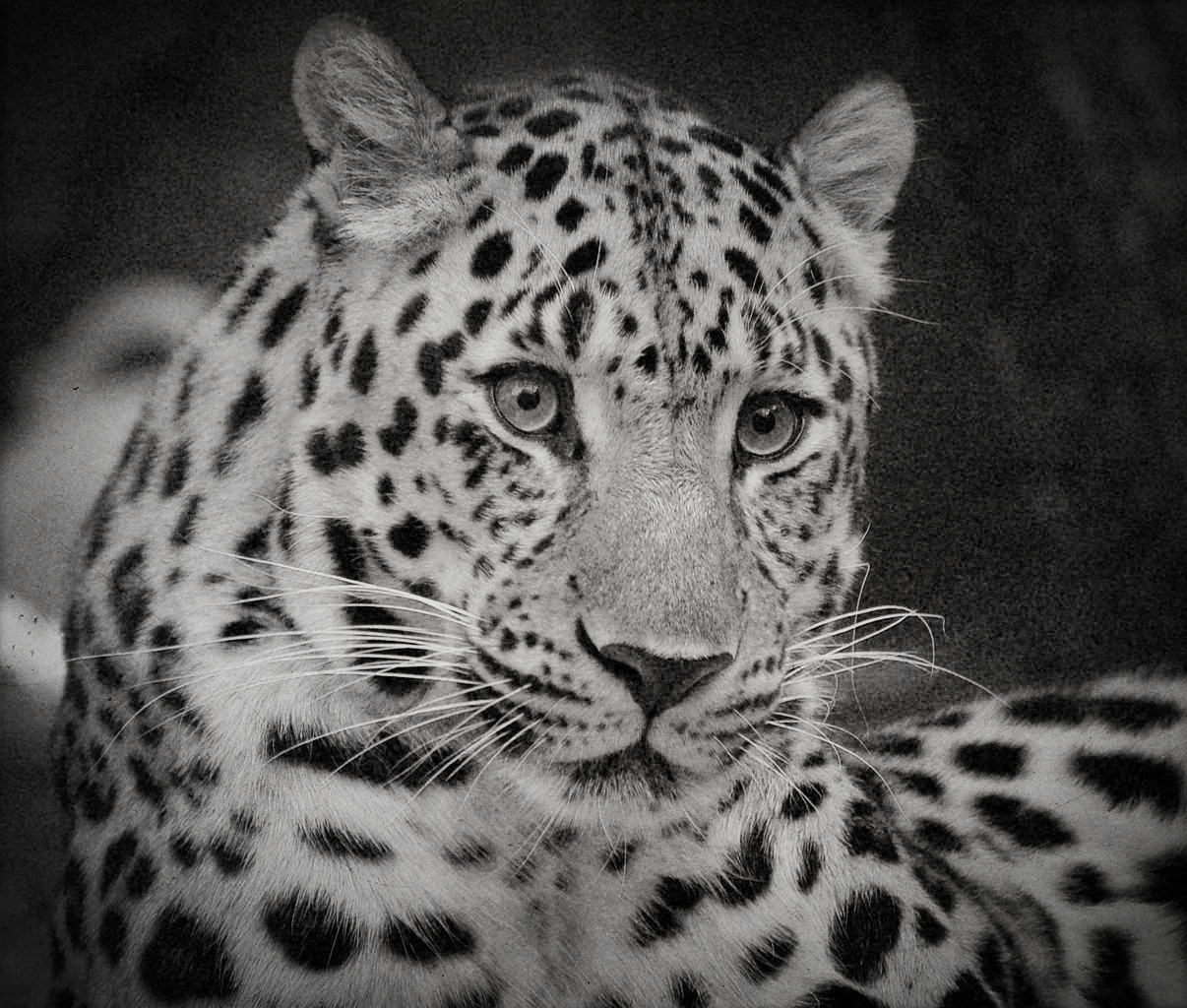
Leopard by Art G. at Wikimedia

So together Jackal and Leopard came up with a plan. 

The next day, Jackal took his bedding and spread it out in the open air. Then Leopard lay down on the bedding, stretched out like a corpse and keeping perfectly still. "Well done, Leopard!" said Jackal. "This is going to work very nicely!"

Then Leopard whispered to Jackal, “We'll start with Porcupine! Call Porcupine first."

So Jackal shouted, in accordance with their plan, “Come! Porcupine, come! That beast that kills animals is dead! Leopard is dead! Come and mourn with me for Leopard! Come to Leopard's funeral!”

So Porcupine came to the funeral, weeping and wailing, as if he was really sorry for the death of his enemy. He approached the supposed corpse, and then he mocked the dead Leopard. "Behold the one who killed so many of my people! Behold his dead body of that murdering beast."


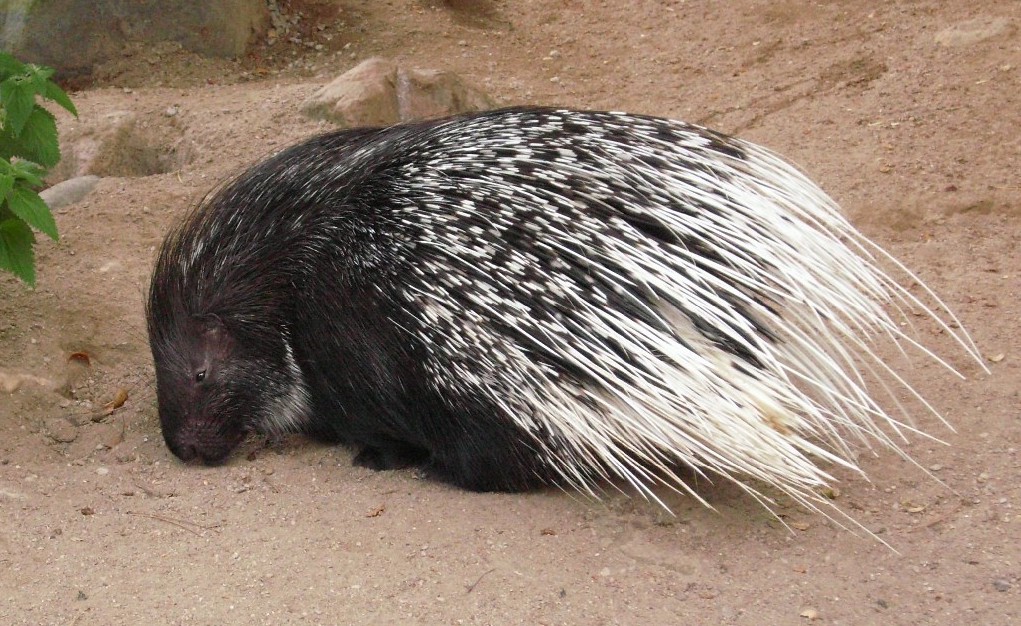
Crested Porcupine by C8 at Wikimedia

Leopard heard everything Porcupine said and then, all of a sudden, he sprang into action: he leaped up and brought Porcupine down under his paw, dead. Then Leopard said to his friend Jackal, “There you go! Go ahead and butcher this one, and then we'll have a feast."

So Jackal butchered the Porcupine and the two friends had a fine meal.

The plan had worked so well that they decided to do it again the next day. Jackal brought out the bedding, Leopard lay down, and this time Jackal called for Antelope. Antelope came, pretending to mourn for Leopard but then mocking him, and Leopard killed him just as he had killed Porcupine, and again Jackal and Leopard enjoyed a good feast.

In this same way they also killed Elephant, Ox, and one creature after another until there were only two left: Gazelle and Tortoise.

"I don't know what we can do now," Jackal said to Leopard. "Gazelle is very tricky, and so is Tortoise. I do not think our plan will fool either of them."

"Oh, I think we can fool them both," said Leopard. "We'll invite them both to my funeral tomorrow."

Then they went to sleep, dreaming of yet more food to feast on, and the next morning Leopard once again stretched himself out on the bedding, pretending to be dead, keeping completely still. His mouth drooped open, his tongue lolling, just like a dead person.

Then Jackal shouted, in accordance with their plan, “Come! Gazelle, come! That beast that kills animals is dead! Leopard is dead! Come and mourn with me for Leopard! Come to Leopard's funeral!” Jackal had to shout very loudly this time, for Gazelle's house was quite far away from the house of Jackal and Leopard.


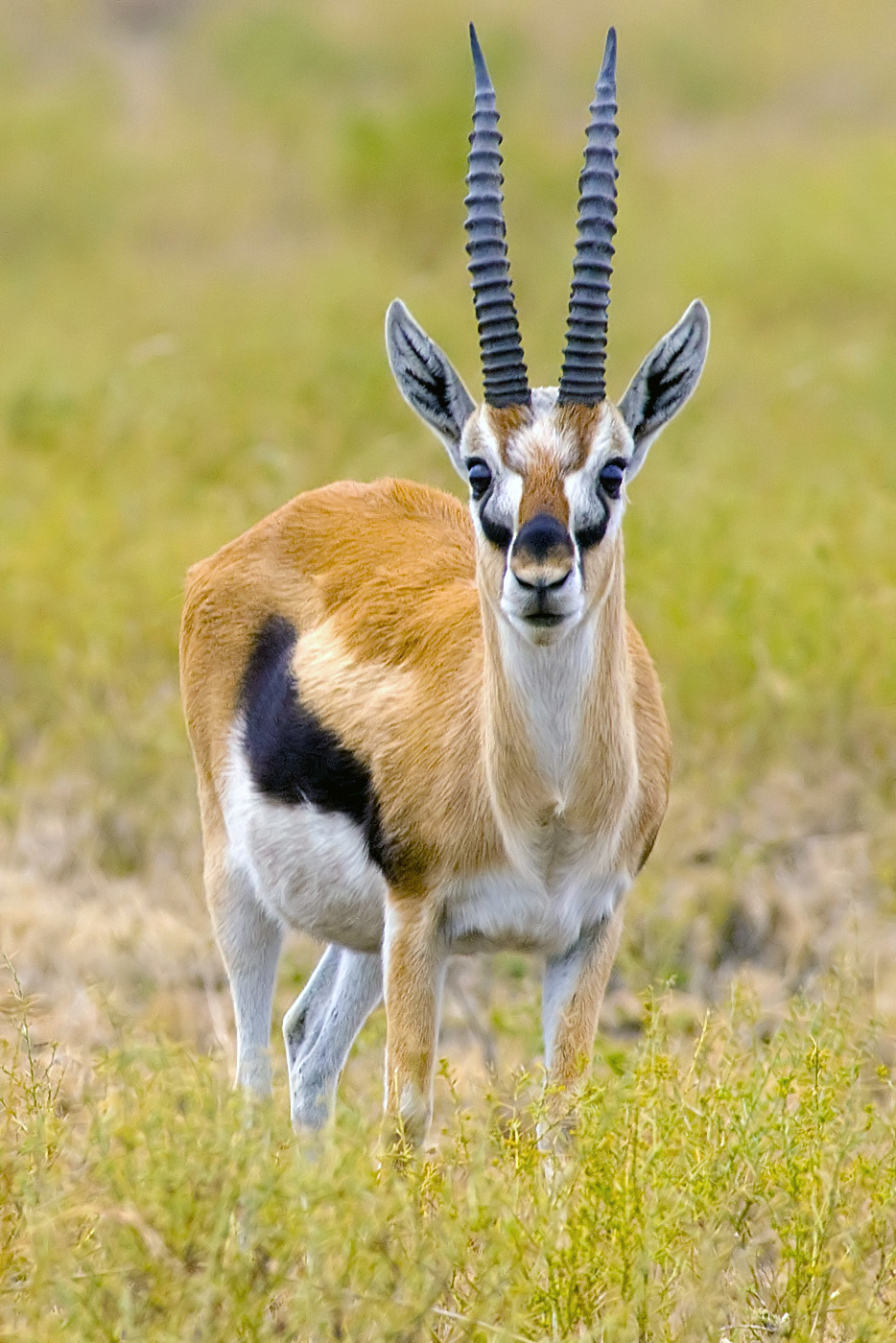
Gazelle by Yathin S. Krishnappa at Wikimedia

When he heard Jackal calling him, Gazelle said to himself, “So, Leopard is dead! I suppose I must go to his funeral!" Gazelle then began to make his way towards the house where Leopard and Jackal lived. 

Along the way he passed Tortoise's house. As he was Tortoise's friend, he stopped there and said, "Tortoise, have you heard the news? Leopard is dead!"

"No, he's not!" said Tortoise. "I'm warning you: Leopard is not dead. You should just go back home now. This is just a trick that Leopard is playing with Jackal's help."

"I'm not so sure," replied Gazelle. "I think I will go see for myself."

"Well," said Tortoise, “if you are determined to go there, I will tell you something.” 


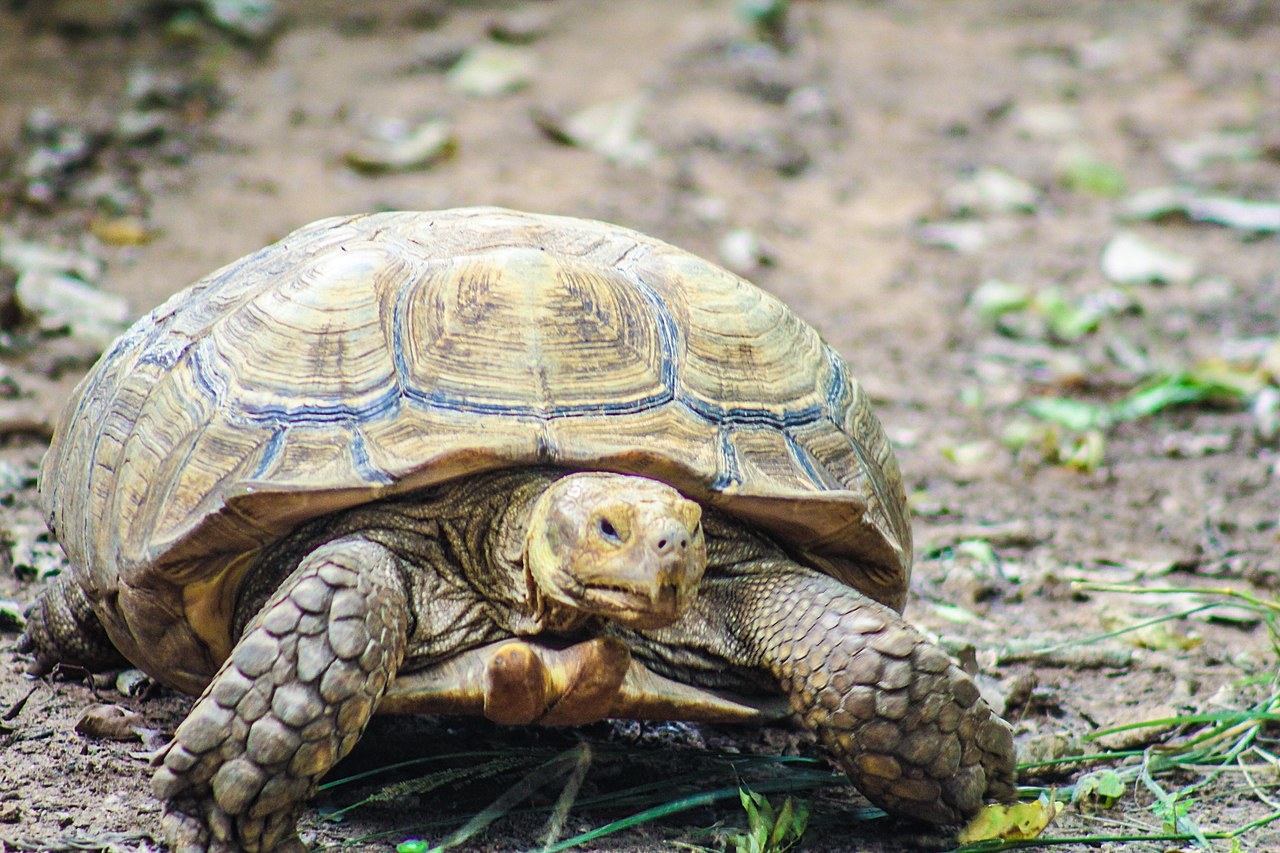
Tortoise by Kenogenic at Wikimedia

"Yes, please!" exclaimed Gazelle.

Tortoise explained in detail what Gazelle should do, and Gazelle smiled. "That is a good plan," he said. "Thank you, Tortoise!"

Gazelle then continued on his way to the house of Jackal and Leopard, and when he arrived he saw Leopard lying there, motionless as a corpse, his tongue lolling out.

"Dear Jackal," he said, "what has brought about Leopard's death?"

"He had a fever yesterday," Jackal replied, "and today he is dead."

Then Gazelle let loose a great wail and he began to rampage through the garden, overturning all the plants, smashing the fruits and vegetables in his supposed grief. As he destroyed the garden he kept an eye on Leopard; Leopard didn't move.

Meanwhile, Jackal, who was distressed to see the garden in ruins, begged Gazelle to restrain himself. "Your grief is great, I can see that," said Jackal. "Calm yourself, please! You should kneel down beside the corpse and weep there for the dead Leopard."

As Jackal spoke, Leopard was listening, and he prepared himself to spring into action, thinking about how tasty Gazelle was going to be. 

So Gazelle slowly approached the supposed corpse, and as he did so, he pulled out the sack of ants, bees, and peppers that Tortoise had prepared for him and threw it at Leopard. The sack burst open, and the bees and ants swarmed everywhere, while the peppers got into Leopard's mouth and eyes. The bees rejoiced, shouting, “We will all sting Leopard!” The ants also rejoiced, shouting, "We will all bite Leopard!" Even the peppers rejoiced, shouting, "We will make Leopard burn!"

Writhing in pain, Leopard jumped up, but the peppers had blinded him, so he didn't even come close to where Gazelle was standing. Then Gazelle laughed as he ran back into the forest. "I have no business here, Leopard!" he said. "My business is back in the forest," and so Gazelle quickly sped away to safety in the trees.

Then Gazelle went straight to Tortoise's home and told him what had happened. "I saw for myself," he said. "Leopard was not dead, and thanks to you, I escaped."

Tortoise smiled. "You would do well to avoid Leopard," he said, "dead or alive."


Wednesday, December 8, 2021

The Friendship of the Leopard and the Goat

This is my version of a public domain story: "The Young Leopard and the Young Goat" which is an Ambundu story from Chatelain's Folktales of Angola. The storyteller was Jelemia dia Sabatelu ("Jeremiah the son of the Shoemaker"), from Malanje, one of Chatelain's main informants. I have followed the original word by word while also feeling free to make my own changes and additions.


The Friendship of the Leopard and the Goat

Leopard-Cub and Goat-Kid used to be friends. 

One day Goat-Kid said to Leopard-Cub, "Let's go to my house and play."

"We played there yesterday," replied Leopard-Cub, "and the day before. We can't always just play at your house. My father will be hunting in the forest today and he told me to watch the house in his absence, so today we need to go play at my house."

Goat-Kid agreed, and together they went to the Mr. Leopard's house.

The two friends played until the sun set, and then Goat-Kid went back to his own home. They played the next day at the Leopard-Cub's house, and again the next day. That way, Leopard-Cub could keep an eye on the house while his father was at work.

"What do you do all day while I am at work?" Mr. Leopard asked his son.

"I play with my friend, Goat-Kid!" replied Leopard-Cub.

Mr. Leopard shouted, "That's the most ridiculous thing I've ever heard. Goats are not our friends! Goats are our food. They are the meat that Leopards like to eat. If he comes here to our house, you cannot let him leave. You can put him here in my sack" — so saying Mr. Leopard handed his son a big sack — "and when I get home, I'll show you how to kill him."

"But how can I put him inside that sack?" asked Leopard-Cub. "I don't think he would like that very much."

"Just tell him it's a game," explained Mr. Leopard. "Then, when he gets in, tie up the sack, and then hit the sack with a big stick until he quiets down."

"I will try, Father!" said Leopard-Cub.

Then Mr. Leopard smiled and went to work in the forest. 

When Goat-Kid came to play that day, Leopard-Cub said, "I found this sack to use for a new kind of game."

"How does it work?" asked Goat-Kid.

"Just get in the sack," replied Leopard-Cub, "and then I'll tell you what happens next."

So Goat-Kid got into the sack, and then Leopard-Cub tied it shut. 

After a while, Goat-Kid shouted, "I don't like this game, Leopard-Cub! Let me out now and we can play some other game."

"Stay a little longer," Leopard-Cub told him.

"But I've got to pee!" said Goat-Kid. "If you don't let me out, I'll have to pee all over your sack."

"Go ahead and pee," said Leopard-Cub. "I don't mind."

"And I've got to poop!" said Goat-Kid. "If you don't let me out, I'll have to poop inside your sack."

Leopard-Cub was sure his father didn't want anyone to poop in his sack, so he shouted, "Okay! Okay! Get out of the sack! It belongs to my father. Don't poop in the sack! I'll let you out!"

Then Goat-Kid got out of the sack and ran outside. He didn't really have to poop; he just said that to fool Leopard-Cub.

When Mr. Leopard returned home that night, he asked eagerly, "Did you catch Goat-Kid in the sack?"

"I did!" said Leopard-Cub proudly.

"Give him to me then!" said Mr. Leopard. "We'll have goat-stew for supper!"

"Well, I caught him in the sack, but then I let him go," Leopard-Cub explained. "He said he was going to pee inside the sack, and I said okay, and then he said he was going to poop inside the sack, so I let him out of the sack and then he went away."

Mr. Leopard said, "Son, you are an even bigger fool than I had realized. Next time, no matter what the Goat-Kid says, you must not let him out of that sack."

In the morning, Mr. Leopard gave his son the sack again and reminded him, "After you catch Goat-Kid, don't let him go. If he says he's going to pee, tell him to pee. If he says he's going to poop, tell him to poop. We can always wash the sack afterwards. Do you understand?"

"I understand," replied Leopard-Cub, and then Mr. Leopard went to work.

What Mr. Leopard didn't know was that Goat-Kid had arrived early that day and was hiding in the bushes, listening to everything the Leopards said. So when Goat-Kid knocked at Leopard-Cub's door, he already had a plan in mind.

"Hello!" said Leopard-Cub eagerly. "You're early! I've got the sack so we can finish the game from yesterday. Come on and get inside!"

"I got inside yesterday," replied Goat-Kid. "It's your turn to get inside."

This was something Leopard-Cub had not expected. His father hadn't told him what to do if Goat-Kid put him inside the sack. "Okay," he said slowly, trying to think of what to do, but when he couldn't think of anything, he got inside the sack, wondering what would happen next.

As soon as Leopard-Cub was in the sack, Goat-Kid tied it shut.

After a while, Leopard-Cub shouted, "I don't like this game either! Let me out now and we can play some other game."

"Stay a little longer," Goat-Kid told him.

"But I've got to pee!" said Leopard-Cub.

Goat-Kid told him, "Go ahead and pee!" 

"But I've got to poop!" said Leopard-Cub.

"Go ahead and poop!" Goat-Kid told him. "But first, I'm going to beat you!" Then Goat-Kid took a stick and beat Leopard-Cub inside the sack. He beat and beat and beat and beat until finally Leopard-Cub was dead.

Then Goat-Kid lay down in Mr. Leopard's bed. He pulled up the sheet over his head and stayed very quiet, waiting for Mr. Leopard to come home.

After a while, Mr. Leopard came home and said, "Son, where are you? Did you catch Goat-Kid inside the sack?"

Goat-Kid answered, imitating Leopard-Cub's voice. "I'm here in the bed, Father! I've got a bad headache, so I'm taking a nap. But I caught Goat-Kid in the sack and beat him with the stick. He's ready to cook; I put salt and pepper and vegetables inside the sack already, so all you have to do is throw the sack in the boiling water; you don't even have to untie it. Throw it in just like that and let it cook."

"What a fine idea, Son!" said the Leopard, surprised and pleased by the day's events. He added wood to the fire so the water in the pot was boiling hot, and then he threw the sack in. 

After a while, Mr. Leopard shouted, "Son, our supper is almost ready. Do you feel well enough to come in here and scrape the fur?"

"I'm coming, Father!" said Goat-Kid, still imitating Leopard-Cub's voice. Then he wrapped himself in the bedsheet and, thus disguised, he went into the kitchen, took the sack out of the pot, and carried the sack outside. Next, he skinned Leopard-Cub, cut off his paws, and arranged the meat on a platter which he took back inside and left in the kitchen.

"Your supper is ready!" he shouted to Mr. Leopard. "But I still don't feel well, so I'm going to go sit outside in the cool evening breeze. You can start supper without me."

Then Goat-Kid went outside and waited until he heard Mr. Leopard start to eat his supper inside the house. "Oh, this is truly delicious!" roared Mr. Leopard as he devoured the meat. "It's the best goat I've ever eaten!"

Goat-Kid laughed and shouted back, now using his own voice, "You think you're so clever, Mr. Leopard, but I am more clever than you. I am Goat-Kid, and the meat you are eating is Leopard-Cub, your son!"

Mr. Leopard rushed outside and saw Goat-Kid running off into the distance. Mr. Leopard chased after him, but Goat-Kid had gotten a head start and Mr. Leopard couldn't catch him.

That is what happened when Leopard tried to fool Goat, but Goat fooled Leopard instead: Mr. Leopard ate his own son, and he has been chasing Goats ever since, hoping to get his revenge.


Tuesday, December 7, 2021

Tortoise the Blacksmith

This is my version of a public domain story: "A Chain of Circumstances" which is a Fang story from Nassau's Where Animals Talk: West African Folklore Tales. I have followed the original word by word while also feeling free to make my own changes and additions. This type of cumulative tale is my favorite type of folktale, and it is a very popular folktale form in Africa.


Tortoise the Blacksmith
and Cockroach's Wonderful Spear

Once upon a time, Tortoise was a blacksmith. 

Once day Cockroach came to Tortoise's workshop to sharpen his wonderful spear. Everyone in the whole wide world knew about Cockroach's wonderful spear, and they feared him because of it.

As Tortoise worked the bellows to make the fire hot, Cockroach looked out into the street and saw Chicken coming. Of all the people and all the animals in the whole wide world, Chicken was the only creature that Cockroach feared. He dropped his spear in a panic and said to Tortoise, “Help me, Tortoise! I see Chicken coming, and I'm afraid she will catch me and kill me. Where can I hide?"

"Don't worry," Tortoise told him. “Go and hide yourself there in the grass.” Cockroach immediately ran and hid in the grass.

Just as Cockroach managed to hide himself, Chicken walked into Tortoise's workshop. Seeing the spear lying on the ground, she said, "Hey, Tortoise! Is that Cockroach's wonderful spear lying there on the ground?"

"Yes," replied Tortoise. "Are you looking for him?"

"Yes, I am!" clucked Chicken. "Where is he?"

"He's hiding in the grass over there," said Tortoise, pointing to Cockroach's hiding place. Chicken ran to the grass, caught Cockroach, and swallowed him.

Just as Chicken was ready to resume her journey, Tortoise shouted, "Hey, Chicken! I helped you; now you help me. Come work the bellows for me to make the fire hot."

Chicken agreed, and as she stood there working the bellows, she looked out into the street and saw Wildcat coming down in the street. Of all the people and all the animals in the whole wide world, Wildcat was the only creature that Chicken feared. She stopped working the bellows and said to Tortoise, “Help me, Tortoise! I see Wildcat coming, and I'm afraid she will catch me and kill me. Where can I hide?"

"Don't worry," Tortoise told him. “Go and hide yourself there in the woodpile.” Chicken immediately ran and hid in the woodpile.

Just as Chicken managed to hide herself, Wildcat walked into Tortoise's workshop. Seeing the spear lying on the ground, she said, "Hey, Tortoise! Is that Cockroach's wonderful spear lying there on the ground?"

"Yes," replied Tortoise. 

"And where is Cockroach?" asked Wildcat.

"Chicken swallowed him," replied Tortoise.

Wildcat purred. "And where is Chicken now?" she asked.

"She's hiding in the woodpile over there," said Tortoise, pointing to Chicken's hiding place. Wildcat ran to the woodpile, caught Chicken, and ate her.

Just as Wildcat was ready to resume her journey, Tortoise shouted, "Hey, Wildcat! I helped you; now you help me. Come work the bellows for me to make the fire hot."

Wildcat agreed, and as she stood there working the bellows, she looked out into the street and saw Leopard coming down the street. Of all the people and all the animals in the whole wide world, Leopard was the only creature that Wildcat feared. She stopped working the bellows and said to Tortoise, “Help me, Tortoise! I see Leopard coming, and I'm afraid he will catch me and kill me. Where can I hide?"

"Don't worry," Tortoise told him. “Go and hide yourself there under that blanket.” Wildcat immediately ran and hid under the blanket.

Just as Wildcat managed to hide himself, Leopard walked into Tortoise's workshop. Seeing the spear lying on the ground, he said, "Hey, Tortoise! Is that Cockroach's wonderful spear lying there on the ground?"

"Yes," replied Tortoise. 

"And where is Cockroach?" asked Leopard.

"Chicken swallowed him," replied Tortoise.

"And where is Chicken?" asked Leopard.

"Wildcat ate her," replied Tortoise.

Leopard growled. "And where is Wildcat now?" he asked.

"She's hiding under the blanket over there," said Tortoise, pointing to Wildcat's hiding place. Leopard ran to the blanket, caught Wildcat, and devoured her.

Just as Leopard was ready to resume his journey, Tortoise shouted, "Hey, Leopard! I helped you; now you help me. Come work the bellows for me to make the fire hot."

Leopard agreed, and as he stood there working the bellows, he looked out into the street and saw the Hunter coming down the street. Of all the people and all the animals in the whole wide world, Hunter was the only creature that Leopard feared. He stopped working the bellows and said to Tortoise, “Help me, Tortoise! I see Hunter coming, and I'm afraid he will catch me and kill me. He's got a gun! Where can I hide?"

"Don't worry," Tortoise told him. “Go and hide yourself there behind the door.” Leopard immediately ran and hid behind the door.

Just as Leopard managed to hide himself, Hunter walked into Tortoise's workshop, carrying a gun on his shoulder. Seeing the spear lying on the ground, he said, "Hey, Tortoise! Is that Cockroach's wonderful spear lying there on the ground?"

"Yes," replied Tortoise. 

"And where is Cockroach?" asked Hunter.

"Chicken swallowed him," replied Tortoise.

"And where is Chicken?" asked Hunter.

"Wildcat ate her," replied Tortoise.

"And where is Wildcat?" asked Hunter.

"Leopard devoured her," replied Tortoise.

Hunter smiled. "And where is Leopard now?" he asked.

Tortoise did not say anything, so Hunter asked again. "And where is Leopard NOW?" he shouted.

"He's hiding behind the door over there," said Tortoise meekly, pointing to Leopard's hiding place. 

Then Hunter went and shot Leopard,
who had devoured Wildcat,
who had eaten Chicken,
who had swallowed Cockroach,
who owned the wonderful spear
that's still lying on the ground
in the workshop of Tortoise the blacksmith.


Monday, November 29, 2021

The Young Rabbit and the Cow

This is my version of a public domain story: "The Hare Who Earned a Cow" which is a Baganda story from Rosetta Baskerville's The Flame Tree and Other Folklore Stories from Uganda. I have followed the original word by word while also feeling free to make my own changes and additions.


The Young Rabbit and the Cow

Once upon a time there was a large family of rabbits who lived together in a beautiful forest glade. One day their old king said, "I want to make a feast before I die, but I have no meat. If only someone would give me a cow! If I had a cow, I would kill it and give you all a great feast, my children." 

One young rabbit exclaimed, "Your wish is my command, O King! I will find a cow for the feast." 

The other rabbits all laughed at him, "How will you find a cow?" they said. "You are only a little rabbit! Even if you did get a cow, you have have to bring it here through the forest, and all the big animals be lying in wait. They would take the cow from you, and there would be nothing you could do about it."

But the young rabbit said, "Just you wait and see! I have a plan to get a cow and bring it back here, but I will need your help: if you will do as I ask, then we will all enjoy the king's feast together."

Still laughing, the other rabbits agreed to do whatever the young rabbit told them, and he ordered them to build a big hut with a high fence all around it. "While you build the hut and the fence, I will go look for something special to put in the hut!" The little rabbit then bounded away into the forest.

When he returned, he was carrying a hollow log which was full of bees. The rabbit had sealed the log shut tight, which made the bees very angry. They were very big bumble bees, and as they buzzed angrily, bzzz bzzzzz BZZZZZ BZZZZZZZZ , it was like the noise of a whole crowd of people, even though they were only bees inside a log. The rabbit took this log and placed it inside the hut.

Next, he traveled beyond the forest to the valley where the humans herded their cattle. He hopped up boldly to the chief cowherd and said to him, "I come with a message from my king! He is planning a great feast, and he requires from you the bigger and most beautiful cow in your herd. Give me the cow! If you do not, then he will declare war, and you will all be killed."

The cowherds all laughed at the rabbit's words because they did not fear the rabbit or his king. "You are most amusing, little rabbit!" said the chief cowherd. "And yes, you shall have your cow, but you must earn it. Stay with us for a week, and every evening when we return here to our camp you must tell us tales of the forest and sing songs for us, entertaining us every night for a week. If you do that, I will give you your cow."

The rabbit was delighted with the cowherd's proposal, and every evening when the sunset had faded and the soft shadows lay on the hills, the cowherds would all settle round the fire and listen to the stories which the rabbit told them, and they learned from him the songs of the forest. For a whole week the rabbit stayed with the cowherds. Then the chief cowherd said, "You have truly earned your reward, rabbit! Choose your cow and take it to your king." 

The rabbit chose a beautiful cow with long sharp horns, and he set off for the forest, driving the cow ahead of him with a long reed. 

Just as the other rabbits had warned him, the big animals of the forest wanted to take the rabbit's cow away from him. The first animal he met was the hyena. 

"You there, Rabbit! Give me that cow," snarled the hyena, "or else!"

"Hello there, Hyena!" replied the rabbit, unconcerned. "I was just on my way to your house. My king wishes you to attend him at once, at his new house in the forest. Perhaps you have seen it? it has a tall fence around it. He wishes to honor you with a great feast!" 

Flattered by the rabbit's words and enticed by the promise of a feast, the hyena squealed with delight and followed the rabbit. 

As the hyena and the rabbit journeyed through the forest they next met the lion. "You there, Rabbit and Hyena! Give me that cow," roared the lion, "or else!"

The rabbit explained about the king and the feast. "I was just on my way to invited you to be one of the guests of honor!" he said. The lion grunted with satisfaction and followed the rabbit and the hyena.

Next they met the buffalo. "You there, Rabbit and Hyena and Lion! Give me that cow," bellowed the buffalo, "or else!"

The rabbit explained about the king and the feast. "I was just on my way to invited you to be one of the guests of honor!" he said. The buffalo snorted with pleasure and followed the rabbit, the hyena and the lion.

Next they met the leopard. "You there, Rabbit and Hyena and Lion and Buffalo! Give me that cow," growled the leopard, "or else!"

The rabbit explained about the king and the feast. "I was just on my way to invited you to be one of the guests of honor!" he said. The leopard purred with approval and followed the rabbit, the hyena, the lion, and the buffalo.

After a while, they came to the new hut that the rabbits had built in the forest, the one with a high fence all around it.

"Wait here," said the rabbit to his guests, "until I call you," and he drove the cow inside the fence. Then rabbit went into the hut and began beating the hollow log with his reed so that all the bumble bees buzzed together even more angrily than before: BZZZZZ BZZZZZZZZ BZZZZZZZZZZZ. The animals waiting outside the fence crouched down in fear for they thought there was a crowd of people inside the fence and, even though they were big animals, they were afraid of people, especially crowds of people.

Meanwhile, the other rabbits were also frightened when they saw the big animals so near. "What have you done?" they said to the little rabbit. "Why have you brought them here? The leopard will tear us to pieces while the buffalo tramples us with his hooves, then the lion will eat us, and the hyena will get the scraps." 

But the little rabbit was unconcerned and said calmly, "Just bring me a basket and an axe and a big carving knife and a little pruning knife," he said, and the rabbits brought the things he asked for. The the little rabbit appointed another rabbit to keep hitting the hollow log with the reed. "Keep hitting it," he said, "and when you hear me yell, hit it even harder!"

Then the little rabbit took the basket, the axe, the big knife and the little knife and went back out to where the animals were waiting, still trembling at the sound they heard coming from inside the fence. The bees were buzzing even more loudly, and the animals were growing even more frightened.

"Don't worry, my friends!" said the rabbit. "Those are just all the people who have come to the feast and who are impatient for the food to be served. You will all get plenty to eat, I promise; you just need to do a favor for my king before the feast can begin."

Then the little rabbit turned to the lion and gave him the basket. "You must bring water for the cooking pot in this basket," he said. "Take it to the stream and bring it back full.

Next he turned to the buffalo. "Take this axe," he said, "and go chop firewood, but it must not come from a tree. You must chop firewood from a rock."

Then he gave the leopard the little pruning knife and said, "Go into the forest and use this to cut some bamboo. But make sure it comes from a bamboo that has no joint! The king needs a long straight bamboo without a single joint in it." 

Last of all, he gave the big carving knife to the hyena and said, "You have the honor of butchering the cow and then skinning it with the royal knife. But be careful: if you taste so much as a drop of blood, you will be executed."

So the animals went away, wanting to complete their tasks as quickly as possible so that the feasting could begin.

The lion ran to the stream and dipped the basket into the water, but every time he pulled the basket out, the water poured through all the holes. Oh no! The lion was scared, thinking he had failed the king of the rabbits, so he dropped the basket and ran away. 

The buffalo found a big rock and tried to chop firewood from it using the axe, but when he hit the rock with the axe, the blade broke in two! Oh no! The buffalo was scared, thinking he had failed the king of the rabbits, so he dropped the axe and ran away. 

The leopard searched through the forest looking everywhere for a bamboo that had no joint. She traveled for miles and miles, and then she realized the sun was setting. Oh no: she would never find what she was looking for in the dark! The leopard was scared, thinking she had failed the king of the rabbits, so she dropped the pruning knife and ran away. 

Meanwhile the hyena began her task. First she butchered the cow, and then she began to skin it, wielding the knife with great skill. After she had been at work for a while, she found it hard to grip the knife as her paws were covered in blood. She then put down the knife and licked her paws to clean them. Then, having tasted the blood, the hyena could not resist: she began tearing into the flesh of the cow. 

The little rabbit, who was hiding nearby, saw what the hyena was doing and shouted loudly, "The hyena is eating the king's meat! Come quickly, everyone! THE HYENA IS EATING THE KING'S MEAT!" As the little rabbit shouted, his comrade beat the hollow log even harder, and the bees buzzed as loudly as an army of warriors. The hyena thought the people were coming out to kill her, so she dropped the knife and ran away, and she did not stop running until she was miles and miles and miles away.

Then the rabbits made a great feast for their old king, and they also chose the clever young rabbit to be the new king and rule the rabbits. In preparing the feast, the little rabbit showed that he not only had wisdom but that he was also calm in the face of danger, just as every king should be.

Sunday, November 28, 2021

The Friendship of the Cat and the Rat

This is my version of a public domain story: "The Cat and the Rat" which is a Swahili story from  Zanzibar in Jephson's Stories Told in an African Forest, as reportedly told by "Osmani," who was the personal servant of Captain Robert Nelson. The animals here have their Swahili names: pania (panya) is Swahili for mouse or rat, and paka is Swahili for cat. The illustration are by Walter W. Buckley. I have followed the original word by word while also feeling free to make my own changes and additions. 


The Friendship of the Cat and the Rat

Once upon a time, long ago, Paka the cat and Pania the rat lived together as friends on the island of Kwale, one of those small islands which is stretched like a string of beads to the south of Zanzibar. These small islands were seldom visited by human beings, who lived on the larger islands like Pemba or on Zanzibar itself.

So it was there on the small island of Kwale that Paka the cat and Pania the rat dwelt together, alone but united in friendship. They lived in a dry, sandy cave in the rocks, and they slept in warm, comfortable beds made of dry leaves and grass. It was a pleasant life, and they had plenty of food to eat. The cat caught birds in the trees, and the rat lived upon nuts and the roots of the manioc plant which grew wild all over the island.

Now after they had lived together many years on their tiny island, the rat one day said, "Let us leave this island, my dear Paka, and go to the island of Zanzibar where the humans live. I am tired of the life here alone; I want to go and see how the children of men live."


"I would gladly go with you, Pania," answered the cat, "but between us and Zanzibar rolls the deep salt sea. How shall we cross over? The tide runs strong, and it's too far for us to swim."

"We can build a boat!" answered the rat. "We just need to dig up a big manioc root and then we can scoop it out and make into a canoe."

"Excellent!" said the cat. "I like this plan."

"And I already have my eye on the manioc root we can use," said the rat, who then led the cat to a very large manioc root which they then dug up together. Then, they set to work scooping out the canoe. It was hard work: the rat used his sharp teeth to gnaw at the root while the cat scratched with his long claws until finally, after several days, the canoe was ready.


"It doesn't look very strong," said the cat doubtfully. "Do you really think it will take us all the way to Zanzibar?"

"Have no fear!" said the rat, "We will just need to make some oars to paddle with, and we'll get to Zanzibar safe and sound, I'm sure of it."

So they made two paddles, one for the cat and one for the rat, and then they pushed the manioc canoe into the water, setting off on their voyage to Zanzibar.

They moved along quite quickly at first, but then the tide began to turn against them, and they still had a long way to go.

The rat, who was actually quite a lazy creature, got tired of paddling, and he was also hungry. He lay down his paddle and began eating pieces of their manioc canoe. As the cat sitting in front, he didn't see what the rat was doing and jus tkept on paddling and paddling and paddling until he was quite out of breath. When he turned around to say something to the rat, he saw that his companion was no longer paddling and was instead greedily eating the bottom of their boat.

"What are you doing?" shrieked the cat. "Here I am paddling, while you are trying to drown us. Stop that! You're going to eat through the boat and the water will come pouring in."

"Don't worry!" said the rat. "I only just now lay down my paddle, and I nibbled only the tiniest bit of manioc. I was out of breath and hungry, but I'm fine now. I'm ready to keep going!" 

The rat's calm tone and charming smile made the cat feel ashamed for having gotten angry. "My apologies," he said. "I was feeling tired also, but I'm also ready to keep going." Then each took up their paddles, the cat rowing in front and the rat behind.

The cat was paddling as hard as he could, yet the canoe did not seem to be moving at all, and when he turned around he saw the rat was not paddling but was gnawing at the bottom of the boat again.

"You are lazy and you are a liar!' shouted the cat. "You are making me do all the work, which is bad enough, and you are also going to get us killed. Stop eating the boat! If you make a hole there, we're both going to drown."

"I'm sorry!" said the rat. "Truly, I apologize! I won't eat more of the boat." He then picked up his paddle and began rowing vigorously, and the cat turned around and also rowed as hard as he could.


So they rowed on together for a while, but the canoe was still little more than half-way to Zanzibar and again the rat's greediness overwhelmed him. Once more he started nibbling on the boat and by now the bottom was so thin that it cracked open and water began pouring in. The canoe was sinking!

With a shriek of fright and fury, the cat tried to grab the rat, but then the canoe broke in two and sank. Both the cat and the rat found themselves in the water.

"You wretched creature!" spluttered the cat as he rose to the surface and swam towards the rat. "You have eaten the boat, so now I will revenge myself by eating you."

"Wait!" gasped the rat. "You cannot eat me here! The salt water will get down your throat and make you sick to your stomach. Let's just swim to the nearest little island and you can eat me there."

"Very well," agreed the cat. "I see a little island there to the west. You swim on, and I will swim behind to see that you do not escape."


So on they swam until they reached the shore of the island, which appeared to be even smaller than the island that had previously been their home.

"Now," cried the cat, as they scrambled up on the beach, "now I will make a meal of you as a punishment for your greediness and treachery."

"But wait!" replied the rat, desperately trying to think of a way to escape the angry cat. "Don't be in such a hurry! Why the rush? Let me shake off all the salt water; otherwise, I'll be too salty to eat. Meanwhile, you can rest here in the sun and let your fur dry off. You'll enjoy your meal much more after you've had a chance to get dry and get well rested after our swim."

The cat was indeed dripping wet, so he agreed to wait before eating the rat and then stretched himself out in the sun to dry. Exhausted by the day's events, he soon fell asleep and began to snore.

Meanwhile the rat, pretending to dry himself, began scratching a hole in the ground as fast as he could, thinking if he could just dig it deep enough he might be able to escape the cat.

Awakened by the sound of the rat digging, the cat opened one eye and asked what he was doing. 

"I'm just getting a good foothold so I can shake off all the salt water," replied the rat. "I'll be ready soon. Just go back to sleep, and then when you wake up from your nap you can eat me."

The rat went on digging in the ground, and every now and then he peeped around to make sure the cat was still napping, until at last he had made quite a deep hole. Just as he paused on the edge of the hole to take a breath, the cat sprang on him and shouted, "I'm ready, Rat! Our friendship is over and I'm going to eat you for my supper!"

But the rat just managed to disappear into the hole before the cat was able to grab him.

And that is how the enmity of the cat and the rat began. Since that time, all the cats are at war with all the rats and mice everywhere. So whenever you see a cat prowling round, you can be sure that cat is looking for a rat. Every cat-mother tells her kittens the story of Pania the rat and Paka the cat, and thus the hunting of the rats by the cats carries on forever.


Saturday, November 27, 2021

The Lion Who Became a Woman

This is my version of a public domain story: "The Lion Who Took a Woman's Shape" which is a Khoekhoe story from Bleek's Reynard the Fox in South Africa; or, Hottentot Fables and Tales. I have followed the original word by word while also feeling free to make my own changes and additions.


The Lion Who Became a Woman

Some mothers and their daughters went out to seek herbs to use for cooking food. On their way home the mothers sat down and said to their daughters, "We must taste the herbs you have gathered." Each daughter offered her mother herbs from their baskets, herbs were all good, except for what one young woman had gathered. "Those herbs are no good for cooking!" her mother told her, and the other women agreed. "Empty your basket," the other women told her, "and go back to find herbs that taste good." 

So the young woman threw away what she had gathered and went back to find the herbs that were good for cooking.

After she filled her basket a second time, she went back to rejoin her mother and the other women, but they were gone, and she could not find them. Not sure what to do, she went down to the river, and there she saw the the Rabbit drinking water from a cup. "Please, Rabbit," she said, "give me some water to drink. I'm thirsty!"

"No!" said the Rabbit. "This cup belongs to me and to my Uncle Lion. Only he and I may drink from this cup."

"But I am so thirsty," the woman replied. "Please, Rabbit, give me some water to drink."

Again the Rabbit refused.

Then the woman grabbed the cup and drank from it. 

"You'll be sorry!' shouted the Rabbit, and he ran home to tell his uncle the Lion what the woman had done. 

The woman was not frightened by the Rabbit's words, and continued drinking water from the cup until she had quenched her thirst. Then she put the cup down and began the long walk back to her village.

After learning from the Rabbit what the woman had done, the Lion came running down to the river. He then sniffed out the woman's trail and chased her. When she turned around and saw the Lion coming after her, the woman sang this song:
My mother, she would not eat my herbs,
Herbs of the field, food from the field.
Hoo-hoo-hoooooo!

When the Lion at last caught up with the woman, they chased each other around a shrub. When he saw that the woman was wearing many beads and bracelets, the Lion said, "Let me try on your beads! Let me try on your bracelets!"

The woman gave to loan her beads and bracelets to the Lion, but afterwards he refused to give them back. So they chased each other around the shrub again until the Lion fell down. The woman jumped on him and pinned him to the earth.

Groaning, the Lion sang out the words of a magical spell:
Aunt, oh my Aunt! It is morning, and time to rise;
Pray, rise from me, Aunt, oh my Aunt!

The woman then rose from the Lion, and again they chased each other around the shrub, until the woman fell down, and the Lion jumped on her, pinning her to the earth.

Groaning, the woman also sang out the words of a magical spell:
Uncle, oh my Uncle! It is morning, and time to rise;
Pray, rise from me, Uncle, oh my Uncle!

The spell compelled him to rise and again they chased each other until the Lion fell down a second time. When the woman pinned him, the Lion sang again:
Aunt, oh my Aunt! It is morning, and time to rise;
Pray, rise from me, Aunt, oh my Aunt!

They rose again and hunted after each other. The woman fell down a second time, the Lion pinned her, and she sang:
Uncle, oh my Uncle! It is morning, and time to rise;
Pray, rise from me, Uncle, oh my Uncle!

But this time the Lion replied:
Hey! Is it morning?
Ha! Is it morning, and time to rise?

Then the Lion ate the woman, being careful to leave her skin intact. Then he took the skin and put it on, and then he put on her dress and her beads and her bracelets, so that the Lion looked just like a woman, and then he went to her family's homestead.

When this counterfeit-woman arrived, her little sister saw her and cried out, "My sister, pour me some milk in my little cup."

But the woman replied, "My sister, I will not pour you any milk."

Then the little girl went to their mother and said, "Mama, pour me some milk in my little cup!"

The mother replied, "Go to your sister, and let her pour the milk for you."

So the little girl went back to her sister and said, "My sister, pour me some milk."

Again, the counterfeit-woman refused. "No," she told her sister, "I will not."

Then the mother said to the little girl, "I sent your sister alone to gather herbs, and I'm not sure what might have happened to her out there. Go to the Rabbit. He will pour you some milk."

The girl went to the Rabbit who poured milk for her in her little cup. Then, when her sister saw the cup of milk, she said, "You have milk! Come and share it with me."

The little child then went to her sister, offering her the cup of milk, they both drank from the cup.

As they were doing this, some milk splashed on the little girl's hand, and the counterfeit-woman licked up the milk with her tongue, the roughness of her tongue, which was a lion's tongue, drew blood. Then she eagerly licked up the blood too.

Crying, the little girl went to her mother and said, "Mother, my sister's tongue scraped my skin so that I was bleeding, and then she drank the blood."

"Your sister is acting like a lion," said the mother, "but I do not know how that happened. She went away and then came back with the spirit of a lion inside her."

Then the cowherds brought in the cows for the evening, and the counterfeit-woman cleaned the pails, preparing to milk the cows as she did every day. But when she approached the cows with a rope to tie them, the cows refused to let her near them.

The Rabbit asked, "Why can't you get near the cows?"

"Leave me alone!" she shouted at the Rabbit. "You do what you want; just leave me alone."

Then the husband of the counterfeit-woman asked his mother-in-law, "What has come over your daughter that the cows refuse to go near her? These are the same cows she always milks."

"I do not know," the mother answered. "Something happened today. She has come home like a lion, and not like my daughter."

The counterfeit-woman then said to her mother, "I cannot milk the cows," and having said this, she sat down.

Then the mother said to the Rabbit, "Bring me the buckets and I will milk the cows. I do not know what is wrong with my daughter."

So the mother herself milked the cows, and when she had done so, the Rabbit brought the buckets to the counterfeit-woman's house. The woman took the milk from him, but she would not give her husband anything to eat.

When night came, she lay down to sleep, and then her husband saw some of the Lion's fur which had slipped out from under the woman's skin that the Lion was wearing. "Oh, this is why the cows would not go near her!" the husband said to himself. Then he brought his mother-in-law to see what he had seen, and then she then told everyone what to do.

"We must remove the hut here without waking the Lion," she said, and so they used magic. 

When they took away the mat walls of the hut, they sang: 
Mats, oh Mats, do us this favor: 
come away making the noise-that-is-no-noise.

Likewise when they took down the poles, they sang: 
Poles, oh Poles, do us this favor: 
come away making the noise-that-is-no-noise.

Then when they rolled up the bed-skins, they sang: 
Bed-skins, oh Bed-skins, do us this favor: 
come away making the noise-that-is-no-noise.

In this way the people removed the hut and all its contents, leaving the Lion there on the ground, still sleeping.

Next they took handfuls of grass, put the grass around the Lion, and then lit the grass on fire, singing:
Fire, oh Fire, do us this favor: 
Flare up and subside before you burn the heart! 
Do not burn the heart, oh Fire!

So the fire flared up around the Lion but did not burn the heart inside him. Feeling the heat of the flames, the woman's heart jumped out, falling onto the ground, and the woman's mother reached out and grabbed the heart, putting it inside a calabash.

As the fire burned hotter and hotter, the Lion shrieked from inside the flames, "I ate your daughter! She was delicious! I ate her all up!"

Then the mother shouted back at the Lion, "I lit a fire! It's burning hot! The fire will burn you all up!"

When the fire died down, there was nothing but ashes left of the Lion. The Rabbit came and took the ashes; no one knows what he did with them.

Meanwhile, the mother nursed her daughter's heart inside the calabash. Each time a cow gave birth to a calf, she took the cow's first milk and poured it into the calabash. The calabash grew bigger and bigger as the woman's daughter grew again inside it.

One day, when the mother went out to fetch wood, she said to the Rabbit, "By the time that I come back, I expect you to have have everything in the hut here nice and clean."

But during her mother's absence, the girl emerged from the calabash and cleaned everything in the hut, putting it all in order just as she knew her mother liked it. Then she told the Rabbit, "When mother comes back and asks who cleaned the hut, you must say: I, Rabbit, I cleaned the hut."

After that, she hid herself in the hut where no one could see her.

When the mother came home, she said, "Rabbit, who cleaned the hut? Everything has been done just as my daughter used to do it."

"I, Rabbit, I cleaned the hut!" replied the Rabbit.

But the mother didn't believe him. She looked in the calabash: it was empty! Then she knew her daughter must be somewhere there in the hut. She looked and looked until at last she found her.

"My daughter!" she exclaimed, and she hugged her daughter and kissed her. From then on, the woman stayed always with her mother, and she did everything that she used to do, although she remained unmarried; the woman who had become a lion did not return to her husband again after that.


Friday, November 26, 2021

The Lion and Mr. Hunger

This is my version of a public domain story: "The Lion and Mr. Hunger" which is a Swahili story from Zanzibar in Jephson's Stories Told in an African Forest. The illustrations are by Walter W. Buckley. I have followed the original word by word while also feeling free to make my own changes and additions.

The Lion and Mr. Hunger

There once lived a Lion who was the strongest and fiercest lion who had ever lived, and all the animals feared him. When he roared it was as if the thunder shook the earth, and the creatures of the forest all bowed down before him for he was their king. Even the strongest among them — Elephant and Rhino, Leopard, Buffalo, Hyena —all acknowledged him as their chief and did his bidding in obedience and fear. The Lion dwelt in a dark cave under the shadow of a great rock, and all around this palace you could see the skulls and bones of his enemies who had come from distant lands to test their strength against his.

When the Lion stood before his cave tossing his tawny mane, gnashing those terrible teeth, and lashing his tail, he was a sight to make the bravest tremble in fear! And at night, when his fearful roar boomed across the country all around and echoed among the rocks, the prowling Hyena would slink away in fear, and the Antelope would spring from his mossy bed by the stream and run across the plain in fear for his life.

The young warrior princes of the neighboring kingdoms had all come to do battle with the Lion, for he was known to the humans as well. The bards sang of the Lion's overwhelming strength and of the bloody battles the Lion had fought there at the mouth of his dark cave. As with the animals, so too with the human warriors: one after another the Lion had killed them all so that his palace had become a charnel house, strewn with the bones of his enemies, human and animal alike. As he defeated all enemies who came against him, the Lion cried out for all to hear, "Behold! I am the chief of all the land, and there is no one as strong and as great as I am!"

Not far from the Lion's cave there was a large rabbit warren, and in that warren there lived a brave and clever Rabbit. You might be surprised to learn that the Rabbit had no fear of his neighbor the Lion; this was because the Rabbit was so small and weak that the Lion took no notice of him. Just the opposite in fact: the Lion tolerated the little creature and the two of them enjoyed a certain familiarity.

So it happened that one morning, when the Rabbit was out for a stroll, he ran into the Lion and said to him as usual, "Good morning to you, Sir Lion!"

"Good mor-R-R-R-R-ning, Rabbit," purred the Lion in reply. "I see you are admiring my appearance. As well you should! Did you ever see anyone as great and as strong as I am?"

Then the Lion pawed the ground, making the dust fly, and he roared so loudly that the Rabbit had to put his paws over his long ears.

"It is true beyond doubt, Sir Lion!" answered the Rabbit. "You are great, and you are strong. Although I do happen to know one person who is even stronger than you."

"Ugh!" shouted the Lion. "UGH! What are you talking about? Who is he? Tell me his name! Where does he live? Show him to me! Take me there and I will tear him to pieces and grind his bones into powder." Then the Lion struck the ground angrily with his huge paws, making the whole countryside shake.

"His name is Mr. Hunger," replied the Rabbit, "and he is no stranger to these parts; I'm surprised you have not met him before. If you can wait until tomorrow, I will take you to a place where you will be sure to find him."

"Yes!" yelled the Lion, seething with anger. "I can wait until tomorrow. I will spend the day today meditating on my greatness, preparing myself to defeat this enemy as I have defeated all my other enemies. Come to me tomorrow morning and I will allow you to escort me to the home of Mr. Hunger, and then you'll see: I will grind Mr. Hunger's bones into powder before your very eyes."

"I am sure you will, O King!" said the Rabbit enthusiastically, whereupon he bowed to the Lion and then scampered away, softly laughing to himself because, of course, things were all going exactly as the Rabbit had planned. He would just need the help of his fellow Rabbits to carry it out.

As the Lion stomped the ground and continue to roar, thinking about the enemy he would face the next day, the other Rabbits trembled in their warren, wondering what new trouble was in store for them, but the Rabbit assured them that this was all part of the plan. "The moment has come at last!" he told them. "We can finally rid ourselves of this Lion, but we will need to work quickly to get everything ready in time. I have promised the Lion that I will bring him to the home of Mr. Hunger tomorrow. That gives us today only to prepare to get the place ready. Will you all help me and do exactly as I tell you?"

"We will!" cried all the Rabbits together. "Just show us what to do!"

The Rabbit smiled. "I knew I could depend upon you," he said. "Now, let's get to work," and then  the Rabbit assigned specific tasks to his family and friends.

Some of them he sent into the forest to chop down tress. 

Others were assigned the task of carrying the logs to the future home of Mr. Hunger.

And the rest were given the job of digging a trench so that the logs could be put into place there, creating an enclosure from which the Lion could not escape. The logs were tall enough that the Lion could not jump over them, and they were placed closely enough together that he would not be able to squeeze through. The house they were building was, in fact, a cage.

They worked hard all day, filled with energy and enthusiasm, carrying out the tasks assigned to them. By nightfall, they had set all the logs in place, creating an enclosure with only one narrow gate leading in and out, and the latch for the gate was on the outside only.

That night they went to bed, eager to see what would happen the next day, confident that the plan would succeed.

Early the next morning the Rabbit went to the Lion's cave, where he found the Lion eager to do battle with Mr. Hunger.

"Good morning, Sir Lion," said the Rabbit happily. "Are you ready for your fight with Mr. Hunger?"

"Ready? I am always ready!" growled the Lion. "I've been thinking of nothing else all night. Where is he? Show him to me without delay!" As he spoke, the Lion was grinding his teeth in a frenzy of expectation and rage.

"Well then, just follow me," said the Rabbit. "We don't have far to go."

The Lion, still growling and grinding his teeth, followed the Rabbit, who led him to the entrance of the enclosure they had built the day before.

"He's just inside there," said the Rabbit. "I told him you were coming." The Rabbit then showed the Lion the open gate. 

With a mighty bound the Lion leaped through the entrance, and the Rabbit immediately closed the gate after him.

The Lion then searched the enclosure, but he found no one there. He then roared angrily, "Where is Mr. Hunger? You told me I would find him here."

"Oh, don't worry!" said the Rabbit. "He'll be there soon. You don't have to find him; he'll find you, I promise."

"Tell him to hurry!" roared the Lion as he looked through the bars at the Rabbit hopping away into the bushes. Once the Rabbit was out of view, the Lion then lay down on the ground, flexing his muscles and impatiently waiting for his enemy to appear.

As time passed, the Lion grew frustrated and tried to jump over the wall of logs, but the wall was too high. He tried to climb over, but he could not make it to the top. Finally he tried to squeeze through the wooden bars, but he could not get out that way either. He had no choice but to stay there and wait.

Two days later, the Rabbit returned. "Sir Lion!" he called. "Sir Lion! Are you there? Have you seen any signs of Mr. Hunger yet?"

"Not yet," roared the Lion feebly, "but I am ready for him when he comes. Tell him to come quickly, coward that he is! I'm going to tear him to pieces and grind his bones into powder as soon as I see him."

"He'll be here soon, I'm sure," said the Rabbit. "It won't be long!" When the Lion said nothing in reply, the Rabbit smiled and then trotted away.

Two more days passed before the Rabbit returned. This time when he peered through the wooden bars, he saw the Lion stretched out on the ground, motionless. His skin was hanging in folds over his ribs, and his head lolled between his paws in the dust.

"Have you seen Mr. Hunger yet?" asked the Rabbit.

"Oh," moaned the Lion, "is that you, Rabbit? Oh, I've never felt like this before. My strength is gone. I can's stand up. Some invisible enemy has brought me down. How did this happen?"

"Ah!" said the Rabbit triumphantly. "That is Mr. Hunger. Didn't I warn you that he was stronger than you? Now you can see that i was right."

The Rabbit's words made the Lion angry, but when he tried to stand up, he fell back down and then breathed his last breath. The Lion was dead.

The news spread quickly among all the animals of the land. The dreaded Lion was dead! Someone had killed the Lion!

Rabbit opened the gate, and the creatures gathered around the body of their dead king. "Who killed him?" they all asked in excitement. "Was it some warrior from among the animals? Or was it a human hero?"

"No animal warrior did this, and no human hero," replied the Rabbit. "It was Mr. Hunger who brought the Lion down at last, here in Mr. Hunger's house."


Latest Post:

Ballads: Willie o Winsbury

One of the new projects I want to start working on for 2022 is BALLADS, and I'm getting a bit of a head start now. My goal is to write u...